

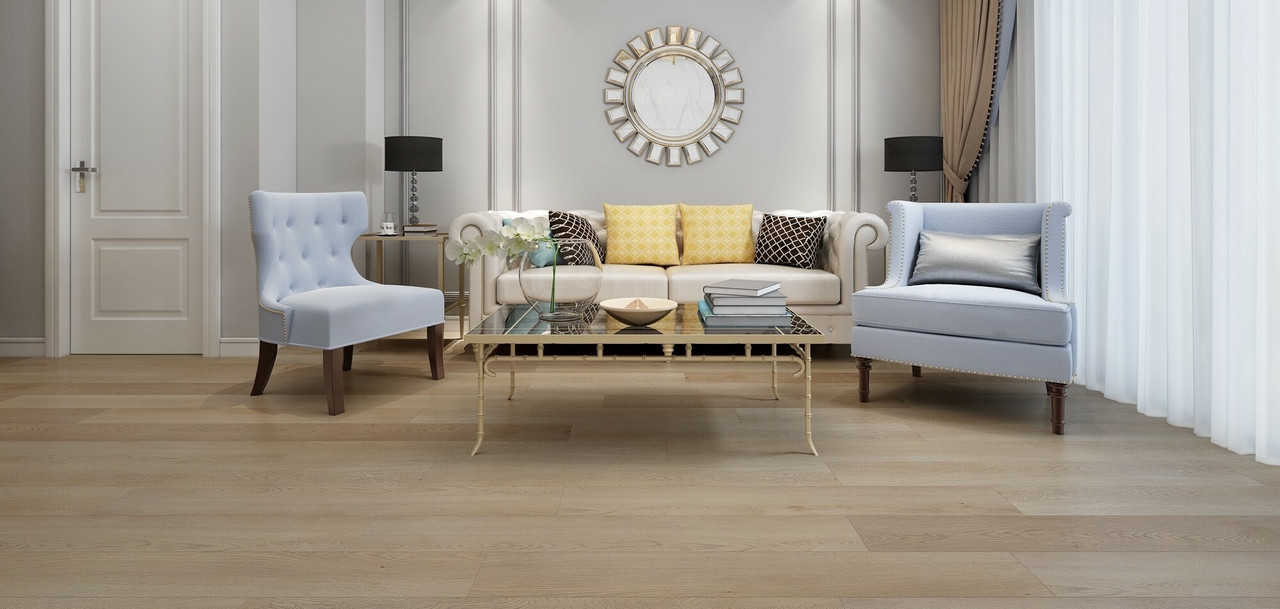
Engineered Hardwood Flooring: A Solid Hardwood Alternative
Engineered hardwood flooring delivers the authentic look, warmth, and grain of real wood with superior structural stability that solid hardwood, laminate, and luxury vinyl simply can't match. Built from multiple layers of wood bonded under heat and pressure, it resists moisture and humidity fluctuations — making it suitable for basements, kitchens, and radiant heat systems. Unlike laminate or luxury vinyl plank, which must be fully replaced when worn, engineered hardwood can often be sanded and refinished to restore its original beauty, making it a longer-lasting investment that adds genuine resale value to any home. With a wide range of species, stains, widths, and finishes available, it remains one of the most versatile and practical flooring choices on the market.
The Most Innovative Flooring Idea Since the Rug
Although the invention of engineered hardwood flooring can't really be attributed to one individual, a good start would be with Mr. Anderson, the founder of what is now called Anderson Tuftex. Mr. Anderson was already in the hardwood flooring business, building parquet floors for the military to be used in higher moisture areas. It wasn't until after World War II that Mr. Anderson went public with the most innovative flooring idea since the rug: engineered hardwood flooring. An engineered floor is made by taking a veneer of hardwood. The hardwood veneer is then adhered it to a piece of plywood, giving it a maximum amount of stability over traditional solid hardwoods. Engineered hardwood is an excellent choice for higher moisture areas, such as basements and other below ground level applications (unlike its big brother, solid hardwood flooring). It does not require the same upkeep and maintenance as solid hardwood floors and boasts better durability overall. This makes it a great choice for higher traffic areas as well as homes with children and/or pets.
Engineered Hardwood Styles and Colors
Engineered hardwood products are manufactured in several widths, from 2 1/4" up to 11". The science behind these floors is in the plywood substrate. As many in the flooring industry know, plywood is just what its name says: "plys" of cheap hardwood that are glued together to form a single core. These pieces are glued in a fashion called cross-plying, which prohibits each layer from pulling away from the other. It's much like a basket being weaved: One strand runs vertically and one runs 90 degrees horizontally. With this application, engineered hardwood flooring can withstand more strain and environmental stress in higher moisture areas. This opens up a new array of inexpensive flooring ideas for residential or commercial settings because durable engineered floors can be installed by gluing them over concrete.
A Budget-Friendly Solution
Typically, engineered hardwood is less expensive than solid. Just as with any product, however, the less money spent on resources, the cheaper the flooring. Cheap engineered hardwood flooring is available, but it is important to note that you get what you pay for. When looking for more affordable engineered wood flooring options, consider that these floors will be something that will be looked at, enjoyed and used for many years.
Special Features
Mr. Anderson of Anderson Tuftex created hand-scraped engineered hardwood flooring, which is a new design technique that adds richness to the product. These types of floors are even more realistic and textured. Shaw Floors later purchased Anderson for their ability to design and manufacture hardwood flooring more efficiently. Though not waterproof, engineered floors maintain stability over solid hardwood flooring. Don't discount its wearability, though: Engineered floors have the same finish as any other flooring construct. Some can also be resanded down the road if needed, depending on the veneer thickness. Most engineered floors are manufactured in 3/8" thickness, but some 1/2" thicknesses are available as well.
Georgia Carpet
Georgia Carpet carries a full line of quality engineered flooring options from the top brands in the industry, such as Anderson Tuftex, Armstrong, Bruce, Shaw, Somerset and others. Georgia Carpet has the best selection of engineered hardwood brands at your fingertips, all at low everyday prices that won't break your budget. As an authorized retailer, you'll get the high-quality products you expect along with the great service and product knowledge that you can trust. Contact us if you have any questions about engineered wood flooring or if you're looking for a specific color, brand, size or finish. Resources, including financing, are also available. National shipping and samples are available.