How to Disinfect LVP Flooring Safely | Georgia Carpet
Posted by Johnny Holbert on 14th Sep 2021
How to Disinfect LVP Flooring Without Damaging It?
Whether you're dealing with a pet accident, a household spill, or germs brought into your home, knowing how to disinfect vinyl floors safely can help protect both your household and your flooring investment. Luxury vinyl plank (LVP) flooring is designed for durability and everyday use, but choosing the wrong disinfectant can potentially damage its protective surface.
To disinfect LVP flooring safely, damp mop with either one cup of white vinegar per gallon of warm water or a pH-neutral antibacterial hard-surface cleaner, using a well-wrung microfiber pad. Never use bleach, ammonia or a steam mop. All three damage the wear layer, and that damage is permanent.
The short version: the disinfectants most people reach for under the sink are the ones that ruin a vinyl floor. What works is a mild acid or a purpose-made antibacterial floor cleaner, applied damp rather than wet.
How to Disinfect Vinyl Plank Flooring
Disinfecting luxury vinyl plank flooring requires more than simply applying a household cleaning solution. The goal is to sanitize the surface without damaging the protective wear layer, leaving excess moisture between the planks, or compromising the flooring's finish.
Follow these five steps when disinfecting your LVP flooring:
- Clear the floor and sweep or vacuum on a bare-floor setting, with the beater bar off. Grit dragged across a floor under a mop does more damage than any cleaner.
- Mix one cup of white vinegar into a gallon of warm water, or prepare a pH-neutral antibacterial floor cleaner to the manufacturer's dilution.
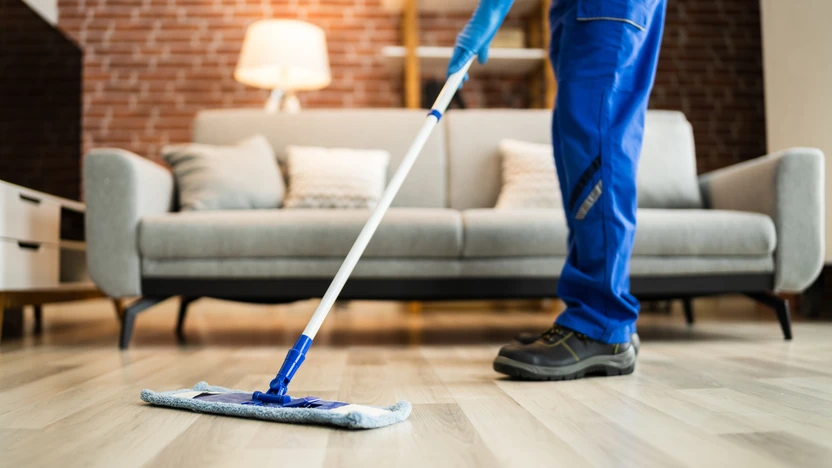
- Dip a microfiber pad and wring it out thoroughly. Damp, never wet. Standing water finds the seams and reaches the adhesive.
- Mop in the direction of the planks, in small sections, rinsing the pad often.
- Let the floor air dry, or finsish with a dry microfiber towel to avoid water spots.
For routine cleaning rather than disinfecting, see our full guide to what to clean LVP flooring with.
What Disinfectants Are Safe for Luxury Vinyl Plank Flooring?
Not every household cleaning product is suitable for luxury vinyl plank flooring. While some solutions are designed to remove dirt and everyday residue, others contain ingredients that may damage the protective wear layer or leave behind an unwanted film.
Before using any disinfectant, review the flooring manufacturer's care and maintenance recommendations.
| Product | Safe on LVP? | What to Know |
|---|---|---|
| White vinegar, 1 cup per gallon of warm water | Yes | Mild disinfecting action, no residue. The standard recommendation, and endorsed by manufacturers including Karndean. |
| pH-neutral antibacterial hard-surface cleaner | Yes | The current best answer. Disinfects without attacking the wear layer. Confirm which specific products Georgia Carpet stocks or recommends before naming any. |
| Mild dish soap, heavily diluted | Yes, with care | Cleans rather than disinfects, and rinse thoroughly or it leaves a film that dulls the finish. |
| Lysol or Clorox disinfecting wipes | Spot use only | Acceptable on a small area such as a pet accident, then wipe with clean water. Not for whole-floor use, and not left to air dry. |
| Bleach | No | Breaks down the wear layer and can permanently discolor the surface. |
| Ammonia and ammonia-based cleaners | No | Same failure mode as bleach. Also strips any factory finish. |
| Steam mop | No | Heat plus moisture warps planks, weakens adhesive and can lift seams. Damage is usually not covered by warranty. |
| Abrasive pads, steel wool, stiff brushes | No | Scratches the protective layer, which is what was doing the protecting. |
| Swiffer WetJet | Check the pad | The mechanism is fine, the solution is the question. Use the dry or damp pad, not a solution containing bleach or ammonia. |
Can You Use Bleach on Vinyl Plank Flooring?
Bleach is generally not recommended for luxury vinyl plank flooring. Harsh chemical cleaners can damage certain flooring finishes, potentially resulting in discoloration or deterioration of the protective wear layer.
Although bleach is commonly used to disinfect household surfaces, that does not mean it is appropriate for every flooring material. Always check your flooring manufacturer's approved cleaning products before applying a disinfectant.
Can You Use Ammonia on LVP Flooring?
Ammonia-based cleaners are another product category to avoid unless your flooring manufacturer specifically approves them. Certain harsh cleaning chemicals may dull or damage the flooring's protective finish.
For safer maintenance, choose a disinfectant compatible with your specific luxury vinyl product and follow the manufacturer's instructions.
Why You Should Avoid Steam Mops on LVP Flooring
Steam mops use high temperatures and moisture to clean surfaces. While this may be suitable for certain flooring materials, it can create problems for luxury vinyl plank flooring.
Excessive heat and moisture may affect adhesives, plank seams, and dimensional dtability. Because steam cleaning may also conflict with manufacturer warranty requirements, it is best to avoid this method unless the flooring manufacturer explicitly approves it.
Why the Protective Wear Layer Matters
Luxury vinyl plank flooring features a protective wear layer designed to resist everyday scratches, stains, and surface wear.
This layer is an important part of the flooring's durability. Using abrasive scrubbers or incompatible cleaning chemicals can potentially damage the surface, reducing its ability to withstand everyday activity.
Once a protective finish has been permanently damaged, routine cleaning generally cannot restore it to its original condition.
Choosing compatible disinfecting products helps maintain the appearance and performance of your LVP flooring.
How to Sanitize LVP Flooring After Pet Accidents
Pet accidents are one of the most common reasons homeowners need to disinfect their luxury vinyl flooring.
When an accident happens, promptly remove the mess and clean the affected surface before applying a manufacturer-approved disinfectant.
Pay close attention to the seams between planks. Although many luxury vinyl flooring products are waterproof, moisture can sometimes penetrate through gaps, perimeter openings, or improperly sealed areas.
If liquids reach beneath the flooring, disinfecting the visible surface may not resolve the underlying issue.
What About Mold and Mildew Under Vinyl Plank Flooring?
Mold and mildew problems involving luxury vinyl flooring may be associated with moisture trapped beneath the planks or within the subfloor.
If you notice persistent musty odors, visible mold, or recurring moisture problems, it is important to identify the source rather than repeatedly applying disinfectant to the surface.
Depending on the extent of the moisture intrusion, professional evaluation or remediation may be necessary.
Can the Wrong Disinfectant Void Your LVP Flooring Warranty?
Using an incompatible cleaning product or method may affect your manufacturer's warranty coverage.
Flooring manufacturers typically provide specific care and maintenance instructions outlining approved products, recommended cleaning methods, and practices to avoid.
Before disinfecting your flooring, review those guidelines carefully. This is especially important when using concentrated disinfectants, specialty cleaning solutions, or products containing harsh chemicals.
If you purchased your flooring through Georgia Carpet, our team can help you locate the appropriate manufacturer care information for your product.
Frequently Asked Questions About Disinfecting LVP Flooring
What can I use safely on LVP floors to sanitize them?
A pH-Neutral antibacterial hard-surface cleaner specifically approved for luxury vinyl flooring is a recommended option. Check that the product is labeled for disinfecting, follow the manufacturer's dilution instructions, and use a microfiber mop to avoid oversaturating the floor.
What is the best disinfectant for luxury vinyl plank flooring?
A purpose-made antibacterial hard-surface cleaner compatible with your flooring is generally preferable to harsh household chemicals. Verify that the product has appropriate disinfecting claims and is approved for your flooring's protective finish.
Does vinegar damage LVP?
Diluted white vinegar is commonly recommended for certain luxury vinyl flooring products, including mixtures of one cup vinegar per gallon of warm water. However, manufacturer recommendations vary, so check your flooring's care instructions before use.
Can you use Lysol or Clorox wipes on vinyl plank flooring?
Lysol or Clorox disinfecting wipes can be used as an option for limited spot treatment, but this is not a universal recommendation. Check the product label and flooring manufacturer's care instructions to avoid potential damage.
Can I use Dawn dish soap to clean LVP flooring?
Mild dish soap, heavily diluted, may be suitable for routine cleaning when permitted by the flooring manufacturer. However, dish soap does not reliably disinfect the surface and can leave residue if not rinsed properly. For more information, visit our guide to cleaning LVP flooring.
What destroys vinyl plank flooring?
Harsh chemicals, abrasive cleaning tools, excessive heat, and moisture penetrating between the flooring can cause damage. Bleach, ammonia-based cleaners, steam mops, and abrasive pads are generally discouraged because they may affect the protective wear layer or plank stability.
What is a good homemade cleaner for luxury vinyl floors?
A commonly recommended homemade cleaning solution is one cup of white vinegar mixed with one gallon of warm water, provided your flooring manufacturer permits it. This mixture is intended for mild cleaning.
Can I use Swiffer wet pads on vinyl plank flooring?
Swiffer wet pads may be compatible with some luxury vinyl floors, depending on the cleaning solution and pad type. Check the product ingredients and your flooring manufacturer's maintenance recommendations before using them.
Protect Your Luxury Vinyl Flooring With Proper Disinfection
To disinfect luxury vinyl plank flooring without damaging it, use a disinfectant approved for your specific flooring, follow its application instructions, and avoid harsh chemicals or excessive moisture.
Protecting the wear layer and following manufacturer care guidelines can help preserve the appearance, durability, and performance of your flooring for years to come.
For more flooring care information, explore these helpful resources:
What to Clean LVP Flooring With
Can LVP Be Installed in Kitchens or Bathrooms?
All information updated October 2026.